Will AI take our jobs?
This is a transcript of my talk at Lugano AI Week 2025, in December.
Throughout all of history, humanity invented tools that made physical labor automatic. We no longer have to employ our children to dig the mines. We no longer have to have sweat shops and we can afford to have two days of vacation per week. So those things came because we used automation.
Now what is happening is we are seeing that automation is being applied to human judgment. The only thing that our parents told you—you know, you should go to the university to not be like that, to not work physically and to afford decent working conditions, decent life–those things are being automated: analysis, research, writing, programming, my trade for instance. Those things now can be done by fewer people faster.
Historical Precedents
So there are some historical precedents on what happens when a single person is able to do the job of 10, or when a product becomes cheaper.
The precedent of that is the company Olivetti. Just last week, this is a picture I took.
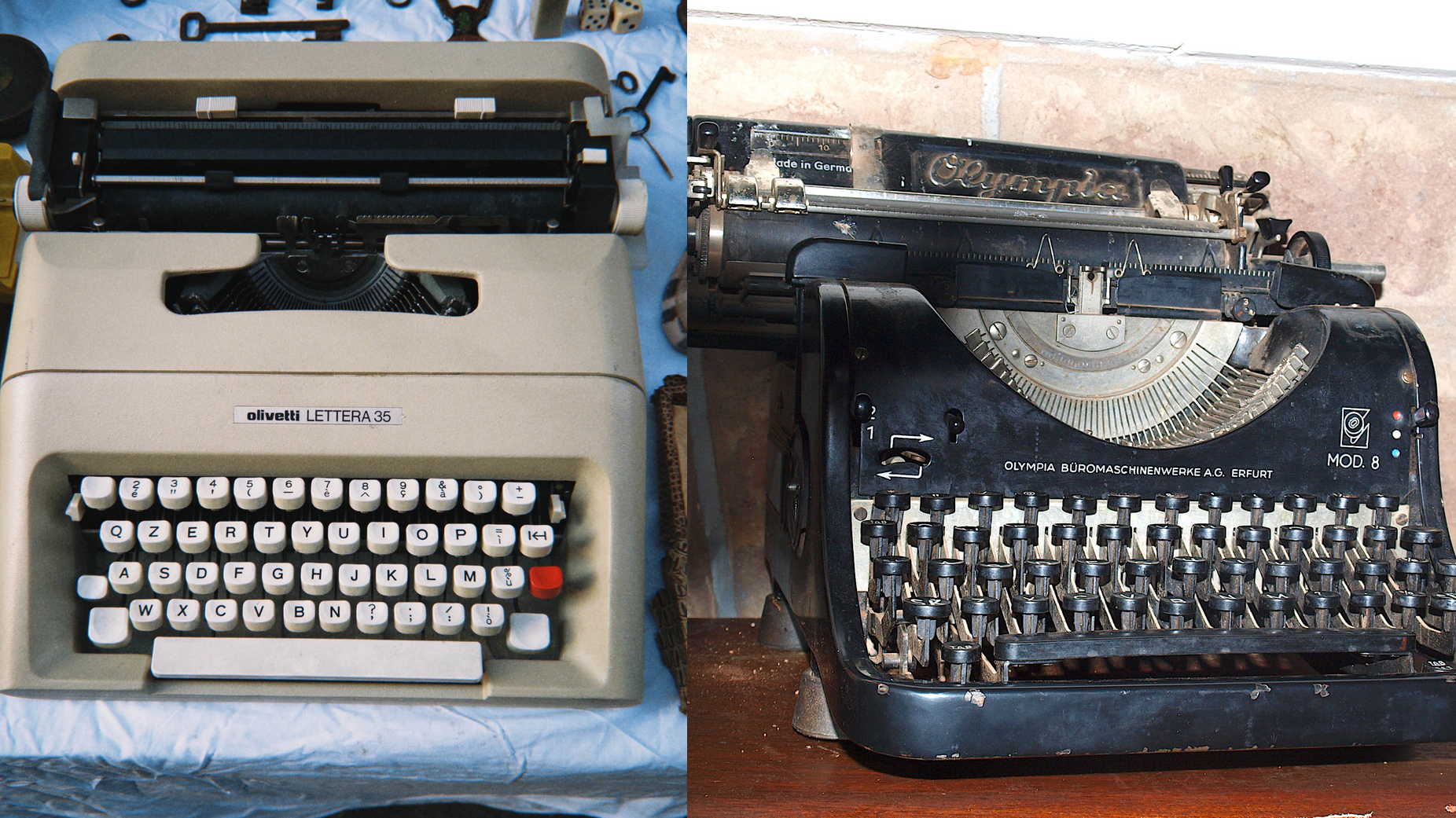
This is from a flea market here in Lugano. This was an old typewriter made by Olivetti. And this company was doing very well. It was employing thousands of workers to assemble these machines. By the 1990s, just 10 years later, they were bankrupt. This is because technology caught up to them.
We invented semiconductors. The technology initially was quite bad. It was worse than typewriters because you could not have enough memory to store documents. But companies like MSI, ASUS, Lenovo – they began manufacturing these things, cheaper things, faster. And so people that were using these tools, for instance this Olympia typewriter, they collectively said, “We don’t care about documents. We just want to get our work done.” And so they no longer purchased these. They purchased things like computers. And I think we can all agree that this is a step in the good direction. Although some 50,000 people lost their jobs just because of technology.
So if you are paid to sit in front of the computer all day, type, send emails–the bad news is that computers are catching up to us. They can do that now in our stead and they are getting better. So if your job is just sitting at a computer, then yes, you are at risk.
The Solution
However, there is a solution and there is a way to reduce the risk of being unemployed. Because after all, no person enjoys sitting in front of a computer except for a small group of people. People just want their things done. They don’t want to spend time in front of these mechanical keyboards.
I want to just ask the audience here–I think at least some of you have heard the main recommendations. What is it you should do to keep your job in this AI craze? For instance, raise your hands. How many of you have used ChatGPT during the last month? Almost all of us. How many of you tried to learn prompting for real? Yes. And how many of you bought the ChatGPT Pro subscription?
What I’m trying to say is that very large companies–Google, Microsoft, especially OpenAI–they are trying to tell you that doing these things, learning AI in and out, is the way forward if you think that is going to keep you your job.
However, they are missing the point.
The secret to keeping a job is not learning AI. You can do that on your own. The secret is:
Connect with the people you work for. Connect with the people you work for.
If your job does not connect you to the people you work for, if you’re not actually directly communicating with the people, if the people are paying for your existence indirectly, then you should connect with the people you work for first and foremost.
By “connect” I mean: if you are a programmer for instance, take your time off the screen and talk to the actual stakeholders–the people whose lives you influence by writing code. This can be someone from the business analysis department. This can be your colleague. Someone who is downstream. Someone between whom the computer screen exists. You really have to talk with these people in order to connect with them. And that is above AI coding. That is above prompting.
I have personal proof that this works. It’s not AI that’s going to get you there. It’s finding the right people and talking to them.
The Evidence
There is ample evidence that this works. For instance, LinkedIn in 2025–just this year–they admitted that of all the jobs in the tech sector, jobs that require sitting at the computer, almost nine out of ten never ever reached a screen. These jobs just went to the hiring manager. The hiring manager had people in their mind that they wanted to hire, and one of them sent an email and they had an interview and they got the job. This has happened to me several times. People prefer to hire people they know, people they trust.
And there’s also another statistic–it’s an older one, it’s a more persistent one–that when a company dissolves, when a company is in hardship, the least connected people are cut first.
That’s just how it works. If you trust someone, you’re not going to fire them because you know exactly how they are going to behave under stress. You cannot afford to lose that person if you know them.
Now you might be thinking, “Hey, you know, this is an old story. You are telling us something very obvious. You should shake hands and be friendly with the CEOs and that’s going to get you to the top of the food chain.”
But I’m not saying that. I’m saying something a step beyond that.
What AI gives you is an ability to create more with a single person’s resources. I know friends–and I myself–managed to create entire products even if you know the full bit, even if you have an idea.
So when you have that ability–and everyone does–the most important thing, the differentiating factor that makes you valuable, is connecting with people, is talking to them.
Let me bring up an example of what it means to connect with people and what happens when you don’t connect with people.
You know what an SEO-optimized website is. It’s a website which you are going to see on Google if you write “travel ideas” or if you write “shopping ideas.”
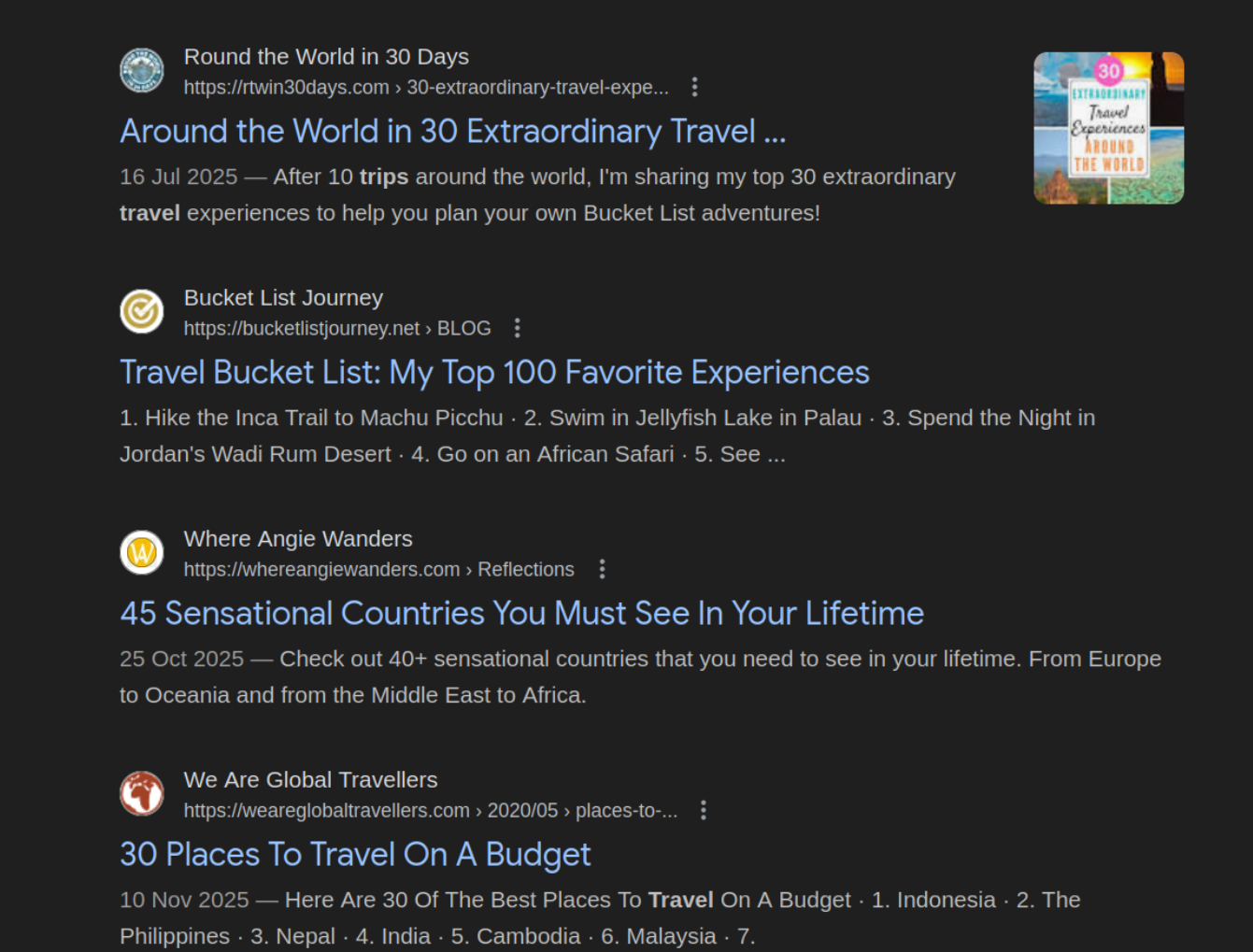
I suppose all of you have seen these websites and you know if you click on this link, behind there is not going to be anything relevant. It’s going to be just AI slop. It’s going to be something that is completely devoid of your experience. It’s going to be just “Top 100 destinations in 2025 for Swiss people.”
People wrote those articles. Now AI is going to write those articles and there’s going to be zero human touch there. Jobs that cannot connect with people and do not connect with people–they’re going to be cut first.
On the other side of the spectrum, does anyone think that for instance Reuters or great YouTube channels like Kurzgesagt is going to be destroyed because of AI? It’s nearly unthinkable because the content they create connects directly to the people. These people who create these videos, they talk to experts. They spend 1,200 hours per video talking to people, revising everything and making it fit.
So this is not going to be replaced, but the SEO websites are going to be replaced.
The Takeaway
This is the evidence that I want you to take home: In the age of AI, human connection becomes the most important thing. It’s no longer going to be programming. It’s going to be connecting with the right people and building something that people want.
Let me try to just give you a concrete thing to do. Here you have a community of people who are all interested in this talk–you all came here. So if you apply this idea, if you believe what I’m saying, then get to know 10 people. Just 10 people. Meet them. Talk to them. New people–not just the people you already know and are comfortable with. Go and meet new people. Talk to them.
Because when you do this, when you connect with another human being, then you have a person that trusts you. Then you have a person that values you personally.
Just personally–you and me and you and everyone else–personally is not replaceable by AI.
AI cannot replace you.
Connect with the people you work for.
Thank you.